+8618234403483
 yanzhang19990421@gmail.com



How to Design a Gold Flotation Process Based on Ore Characteristics?
 Sheena
 Apr 18, 2026
 508
508
If you want to know more details about equipment, solutions, etc, please click the button below for free consultation, or leave your requirements!
 Message
 Chat Now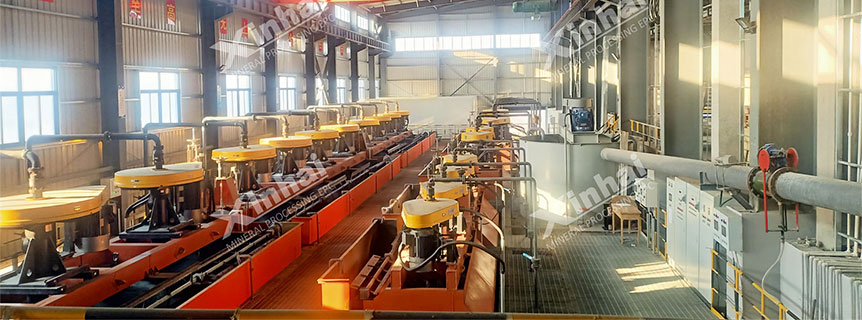
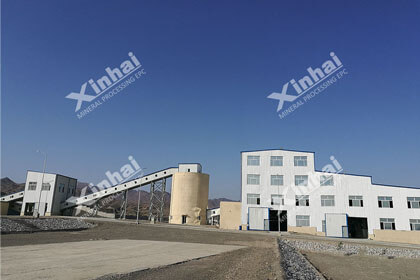
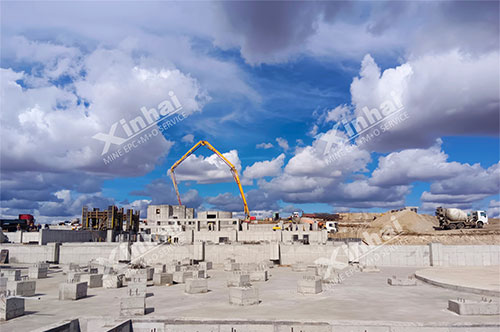
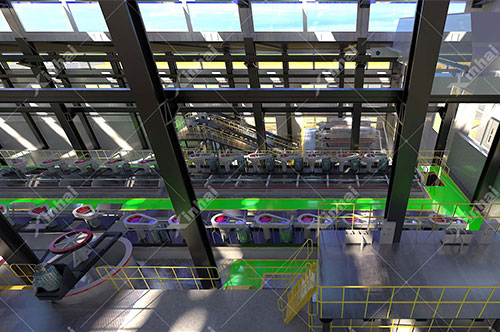
3000tpd-gold-flotation-processing-plant
Designing a gold flotation process begins with understanding that flotation is not governed by a standard formula, but by the behavior of the ore itself. In many projects, poor recovery is often traced not to equipment limitations, but to a process that does not match the mineralogical characteristics of the ore.
Gold may occur as free particles, be associated with sulfide minerals, or be locked in refractory structures, and each condition can respond very differently during grinding and flotation. For this reason, successful process design starts not with a flowsheet, but with understanding how the ore is likely to behave during separation.
Mineralogical analysis is often the foundation of this process because it determines how gold occurs, what minerals host it, and what conditions may limit recovery.
01Why Does Grind Size Have Such a Strong Influence on Flotation Recovery?
BackGrinding has such a strong influence because flotation depends on particle liberation, and liberation is controlled directly by particle size. If the grind is too coarse, gold-bearing minerals may remain locked with gangue and fail to float, while excessive grinding can generate slimes that interfere with selectivity and destabilize froth performance.
A practical example can be seen in sulfide gold ores where an initial grind may produce acceptable flotation kinetics but still leave part of the valuable mineral insufficiently liberated. In such cases, introducing regrinding before cleaner flotation has sometimes improved both recovery and concentrate quality, even though the original circuit appeared technically sound.
02What Affects the Choice of Flotation Circuit?
BackFlotation circuit selection depends largely on ore complexity and separation objectives. Simple sulfide ores may be effectively treated using a rougher-scavenger-cleaner arrangement, while more complex ores may require staged grinding, multiple cleaner stages, or selective flotation to control impurities and improve concentrate quality.
Reagent selection is closely linked to this because flotation is fundamentally a chemical separation process. Collectors, frothers, and modifiers interact directly with mineral surfaces, and their performance depends on the chemistry of the pulp as well as the mineral associations within the ore. In many operations, reagent optimization has improved recovery more significantly than equipment changes.
03What Are Common Mistakes in Gold Flotation Process Design?
BackOne common mistake is assuming that a flowsheet successful in one project can simply be copied to another. This often fails because flotation performance is controlled by ore-specific behavior, not by generic process templates.
Another common mistake is treating ore grade as the primary basis for design, when in reality mineralogy, liberation behavior, and gangue interactions often have a much greater effect on flotation response.
A third mistake is underestimating the importance of test work. In practice, many process problems that appear to be caused by equipment limitations are actually caused by issues that should have been identified during laboratory or pilot testing.
04Why Is Test Work Essential Before Finalizing a Flowsheet?
BackTest work is essential because it is the only reliable way to bring together all the variables that influence flotation performance. Bench-scale tests help establish grind size and reagent response, locked-cycle tests provide insight into circuit behavior, and pilot testing can reveal scale-related issues that may not appear in laboratory conditions. Without this testing, process design remains theoretical and may perform very differently under real operating conditions.
In practice, most successful gold flotation processes are not designed once and finalized immediately, but adjusted repeatedly as test results improve understanding of the ore. This iterative approach is often what separates a technically plausible flowsheet from one that can consistently achieve both recovery and economic targets.
05Conclusion
BackUltimately, designing a gold flotation process based on ore characteristics means recognizing that recovery depends on the interaction between mineralogy, liberation, chemistry, and operating conditions. No standard flowsheet can replace this understanding, because flotation performance is determined by how well the process matches the ore it is intended to treat. When process design is guided by ore behavior and supported by testing, the result is a far more reliable and efficient flotation system.


RELATED PRODUCTS
-
BF Flotation Cell
-
JJF Flotation Cell
-
SF Flotation Cell