+8618234403483
 yanzhang19990421@gmail.com



Flotation Equipment Purchasing Guide
 zeki
zeki
 Jan 29, 2026
 534
534
If you want to know more details about equipment, solutions, etc, please click the button below for free consultation, or leave your requirements!
 Message
 Chat Now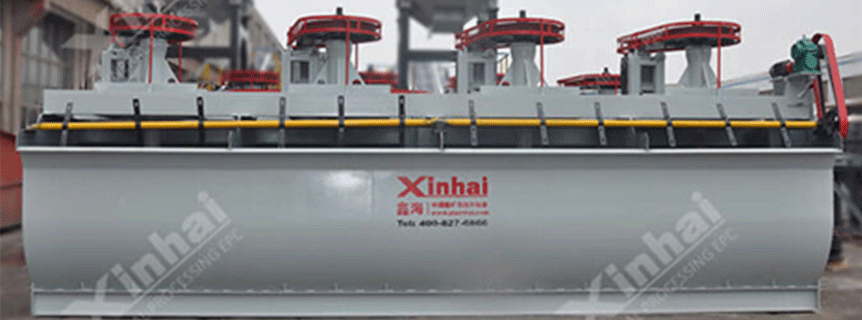
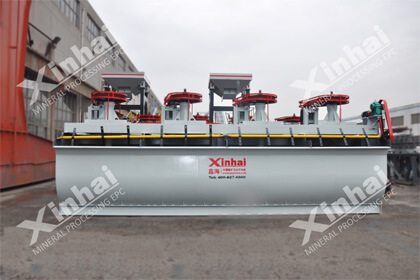
XCF-Air-Inflation-Flotation-Cell
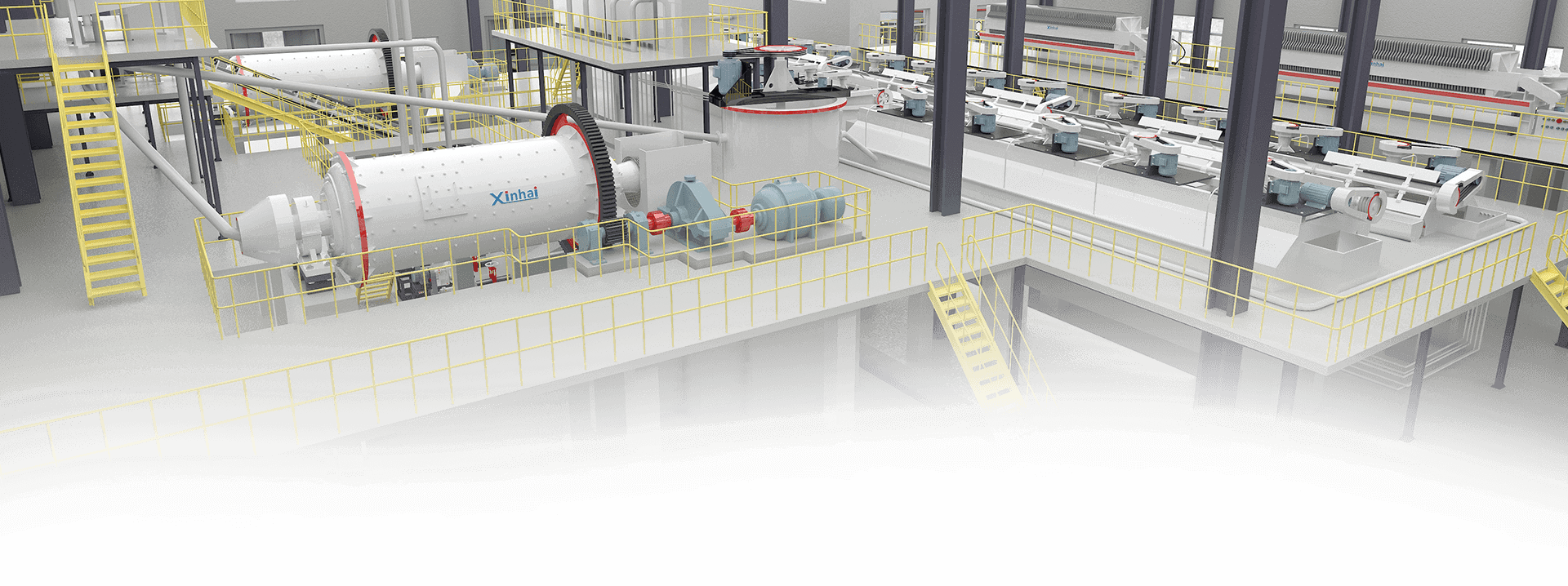
Flotation equipment is the core machinery in mineral processing operations. Its selection and procurement directly impact processing efficiency, product specifications, and overall production costs. For primary practitioners in the mining industry, selecting flotation equipment requires abandoning blind selection practices. Instead, it should involve a scientific evaluation centered on the actual production needs of the mine, focusing on core dimensions such as equipment compatibility, operational practicality, and after-sales service reliability, thereby establishing a solid equipment foundation for mineral processing production.
01Working Principle of Flotation Equipment
BackWhen the impeller rotates, the slurry in the impeller chamber is subjected to centrifugal force due to the impeller's action and is thrown outward, creating a negative pressure zone within the impeller chamber. Air is then drawn through the air intake pipe and central cylinder into the impeller chamber, where it mixes with the drawn-in slurry, forming numerous fine bubbles. After being stabilized by the diffuser, these bubbles disperse evenly throughout the cell, forming mineralized bubbles. The mineralized bubbles rise to the froth layer and are scraped off by scrapers as the froth product.
02Classification and Models of Flotation Equipment
Back1. Mechanical Agitation Flotation Cell
In these machines, both aeration and agitation of the slurry are accomplished by a mechanical agitation device consisting of an impeller and stator. They belong to the self-aerating type of flotation machines, typically featuring upper air suction, meaning air is drawn in near the mechanical agitator at the bottom of the flotation cell.
BF Mechanical Agitation Flotation Cell
SF Mechanical Agitation Flotation Cell
JJF Mechanical Agitation Flotation Cell
2. Air Agitation Flotation Cell
These machines are equipped with both a mechanical agitation device and utilize an external blower to force air into the slurry. However, the mechanical agitator primarily serves to mix the slurry and distribute the air flow, as aeration mainly relies on the external blower. Aeration and agitation are separate functions.
XCF Air-Inflation Flotation Cell
KYF Air-Inflation Flotation Cell
3. Pneumatic Flotation Machines
Pneumatic flotation machines are characterized by the absence of a mechanical agitator and drive components. Air for aeration is supplied by a dedicated compressor. Flotation columns belong to this category.
XJB Bar Flotation Cell
Cyclone Micro Bubble Flotation Column
CLF Flotation Cell
03Key Considerations for Purchasing Flotation Equipment
Back1. Compatibility with Ore Properties and Process Requirements
(1) Determine the type of flotation machine based on ore floatability, particle size distribution, and slime content.
(2) Match the number of flotation stages and slurry processing capacity of the mineral processing flowsheet.
(3) Ensure flotation performance aligns with the overall process to avoid equipment-process mismatch.
2. Matching Production Scale and Capacity Needs
(1) Select equipment specifications corresponding to the mine's designed capacity and daily ore throughput.
(2) Small-scale mines may opt for single-cell/small flotation machines, while medium-to-large mines should consider multi-cell series/large-scale units.
(3) Allow for a slight capacity buffer to accommodate future expansion, reducing the need for repeated investment.
3. Energy Costs and Operational Stability
(1) Prioritize low-energy-consumption equipment to reduce daily operational costs like electricity and labor.
(2) Pay attention to the manufacturing precision of core components such as impellers and stators.
(3) Ensure stable equipment operation to minimize production downtime losses caused by failures.
4. Equipment Materials and Wear/Corrosion Resistance
(1) Select appropriate materials for wetted parts based on the slurry's abrasiveness and acidity/alkalinity.
(2) Prioritize materials like wear-resistant cast iron or rubber lining for tanks, impellers, and liners.
(3) Enhance equipment service life, reducing the frequency and cost of subsequent part replacements.
5. Ease of Operation and Maintenance Difficulty
(1) Choose equipment with a simple structure and intuitive operator interface, suitable for entry-level skill levels.
(2) Ensure core components are easy to disassemble and replace without requiring complex special tools.
(3) Lower the threshold and time cost of daily maintenance, improving on-site operational efficiency.
04Conclusion
BackSelecting flotation equipment must closely align with the mine's practical conditions, prioritizing the match with ore properties, process requirements, and production capacity. It should also balance factors like equipment energy consumption, material wear/corrosion resistance, and ease of operation and maintenance. Simultaneously, emphasis should be placed on evaluating the manufacturer's technical expertise and comprehensive after-sales service support. Choosing equipment with high compatibility, stable operation, and easy maintenance helps reduce overall costs and ensures the efficient operation of the mineral processing plant.


RELATED PRODUCTS
-
BF Flotation Cell
-
JJF Flotation Cell
-
SF Flotation Cell