+8618335758886
 laura@xinhaimining.com



 Sheena
 Dec 11, 2025
 3579
3579 Message
 Chat Now
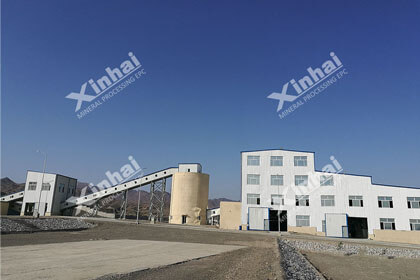
Gold-flotation-plant
While free-milling gold can often be recovered through gravity separation and cyanidation, many modern deposits are sulfide-rich, fine-grained, or locked within complex mineral matrices that prevent direct leaching. In these cases, the gold flotation process has become the dominant beneficiation method, offering high recovery, cost efficiency, and strong adaptability to various ore types.
This article provides an in-depth guide to the gold flotation process, covering its principles, flowsheet design, reagent systems, equipment, operational control, advantages, challenges, and investment considerations.
01What Is the Gold Flotation Process?
BackGold flotation is a physicochemical mineral separation process that exploits differences in surface hydrophobicity between gold-bearing minerals and gangue. During flotation, selectively adsorbed reagents cause gold particles and gold-bearing sulfides to attach to air bubbles, rise to the surface of the flotation cell, and form a froth concentrate. Unwanted minerals remain in the slurry and are discharged as tailings.
Although flotation does not extract gold directly, it produces a high-grade concentrate that can be treated by cyanidation, roasting, pressure oxidation, or smelting, dramatically improving gold recovery and reducing downstream processing costs.
02When Is Gold Flotation Used?
BackGold flotation is especially effective for:
1. Sulfide-Rich Gold Ores
Many gold deposits contain pyrite, arsenopyrite, chalcopyrite, galena, sphalerite, or other sulfides that encapsulate or host gold. Flotation selectively recovers these sulfides and the gold contained within them.
2. Fine-Grained and Ultrafine Gold
Gravity separation struggles when gold particles are <50 μm. Flotation excels at recovering fine particles with the help of strong collectors and frothers.
3. Polymetallic Gold Ores
In deposits containing gold-copper, gold-silver, gold-lead-zinc, or other combinations, flotation can be adapted for selective separation or bulk concentrates.
4. Refractory Gold Ores
Refractory ores often require flotation prior to oxidation or pressure treatment to reduce the mass of material entering expensive downstream circuits.
5. Ores with Preg-Robbing Carbon
When gold adsorbs onto organic carbon during leaching, flotation can be used to upgrade sulfides first and treat the concentrate separately.
03The Gold Flotation Process Flow
Back1. Crushing and Grinding
The objective of comminution is to liberate gold-bearing sulfides and expose mineral surfaces for reagent attachment.
Primary crushing: jaw crusher
Secondary/tertiary crushing: cone crusher
Grinding: ball mill + hydrocyclone classification
Typical grind size for gold flotation: 75–90% passing 75 μm.
A finer grind increases liberation but also increases energy cost and risks overgrinding, which can cause slime coating and poor flotation performance.
2. Slurry Conditioning
Before entering flotation cells, the slurry must be conditioned with flotation reagents to modify surface properties.
Key reagent groups include:
Collectors
These reagents selectively render gold, pyrite, and other sulfides hydrophobic, such as Xanthates (PAX, SIBX), Dithiophosphates (DTP), Thionocarbamates, Aerofloat series.Frothers
Frothers stabilize bubble formation and increase froth mobility, such as MIBC, Pine oil, Polypropylene glycol (PPG-based frothers).pH Regulators
Most gold flotation requires alkaline conditions (pH 8–11), such as Lime (most common), Sodium carbonate,Caustic soda (for special situations).Depressants
Used to suppress gangue minerals or unwanted sulfides, such as Zinc sulfate, Sodium sulfite, Cyanide (in controlled differential flotation).Activators
Copper sulfate is widely used to activate pyrite and arsenopyrite surfaces, boosting collector adsorption.
Reagent selection and dosage directly influence recovery, selectivity, concentrate grade, and operating cost.
3. Rougher Flotation
The conditioned pulp enters mechanical flotation cells or flotation tanks. In rougher flotation, the goal is maximum recovery, even at the expense of concentrate grade. Air is injected, and hydrophobic particles attach to bubbles and overflow as froth.
Rougher flotation typically recovers 70–90% of the gold in a moderate-grade concentrate.
4. Scavenger Flotation
Rougher tailings flow into scavenger cells to recover additional gold that did not float initially. This maximizes overall metal recovery and reduces losses.
Scavenger concentrate is usually recycled back to the rougher concentrate or upgraded in intermediate cleaning circuits.
5. Cleaner Flotation
Cleaner flotation aims to upgrade rougher concentrate to a high-grade final gold concentrate.
Typical cleaning stages: one to three, depending on ore complexity.
The final concentrate may contain:
20–200 g/t Au
5–45% sulfur
High precious-metal ratios (Au/Ag varies by deposit)
Cleaner tailings may be re-cleaned or discharged depending on grade.
6. Dewatering and Concentrate Handling
After flotation, the concentrate is thickened and filtered:
High-rate thickener
Disc filter
Pressure filter
The dewatered concentrate is then sent to downstream gold extraction processes.
04Downstream Processing of Flotation Concentrate
BackGold flotation concentrate is typically processed using:
1. Cyanidation (CIL/CIP)
Highly effective after flotation because the concentrate mass is small and gold is more exposed.
2. Pressure Oxidation (POX)
Used for high-sulfide, refractory concentrates.
3. Roasting
A thermal treatment that decomposes sulfides and liberates gold.
4. Bio-oxidation (BIOX)
Environmentally friendly microbial oxidation of sulfide minerals.
5. Direct Smelting
Used when concentrates are rich in gold and have low penalty elements.

05Equipment Used in Gold Flotation Plants
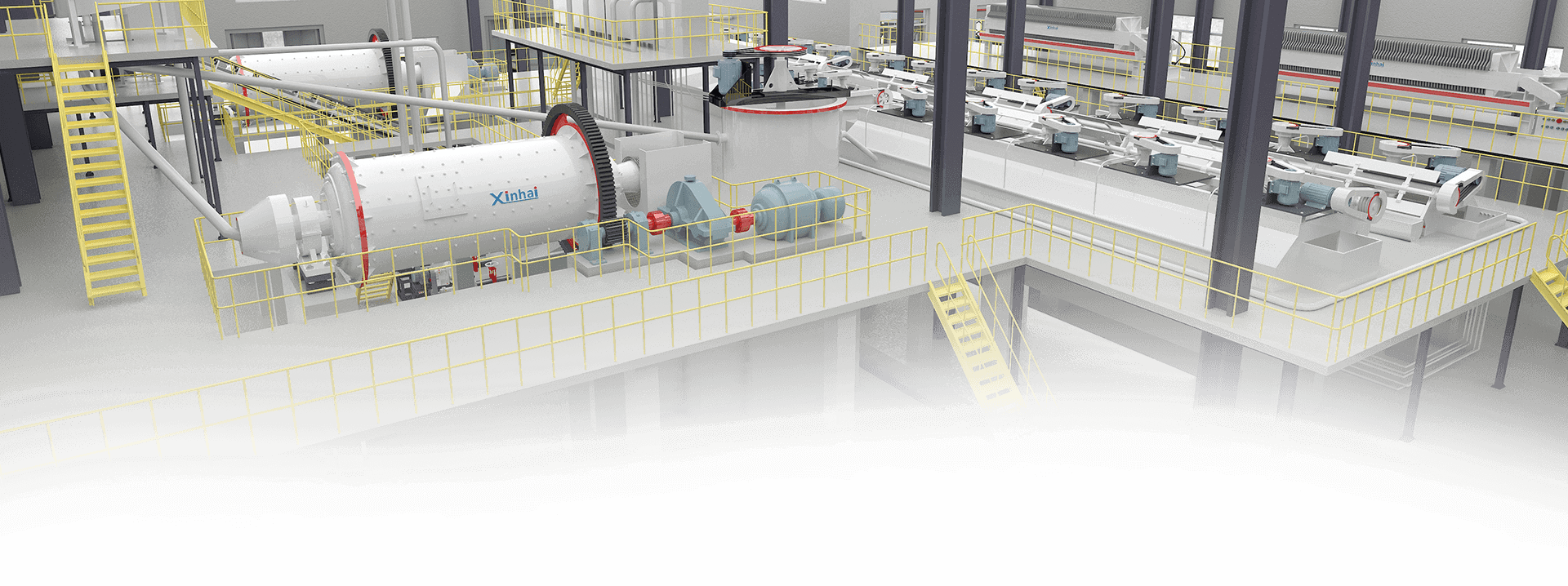
BackA modern gold flotation plant includes:
Jaw crusher / cone crusher
Ball mill, SAG mill, or rod mill
Classification: hydrocyclones
Conditioning tanks
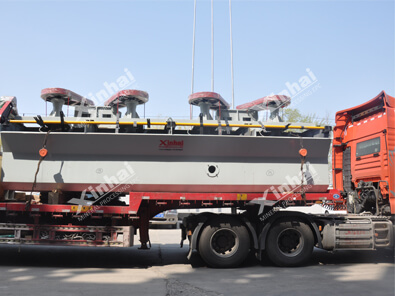
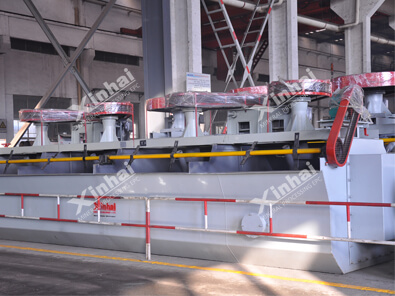
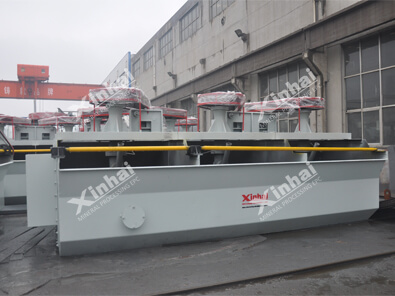
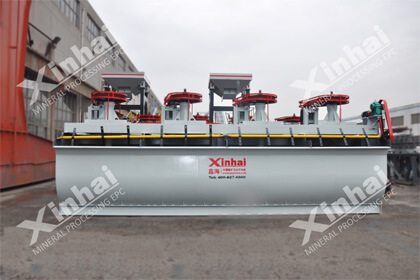
Mechanical flotation cells (forced-air or self-aspirating)
Flotation columns (optional)
Flotation air compressors and blowers
Reagent mixing and dosing systems
Concentrate thickeners
Filtration units
Automation systems such as froth cameras, pH meters, and online analyzers greatly improve process stability.
06Advantages of the Gold Flotation Process
Back1. High Recovery of Fine and Complex Gold
Flotation can recover gold particles smaller than 20 μm, which gravity methods cannot.
2. Strong Selectivity
Through reagent control, flotation can separate gold-bearing minerals from gangue with high precision.
3. Lower Carbon Footprint and Cost vs. Whole-Ore Leaching
Flotation reduces the mass entering cyanidation, leading to lower energy, reagent, and detox costs.
4. Flexibility for Polymetallic Systems
The process supports differential flotation of Cu, Pb, Zn, and Au.
5. Compatible with Refractory Ore Treatment
Flotation is typically the first stage in POX, roasting, or BIOX flowsheets.
07Limitations and Challenges
Back1. Sensitive to Mineralogy and Surface Chemistry
Subtle changes in ore chemistry can significantly affect flotation performance.
2. High Reagent Costs in Complex Ores
Certain ores require customized reagent schemes with higher consumption.
3. Poor Performance with Free-Milling Coarse Gold
Flotation is less effective for gold >200 μm unless gravity circuits are used first.
4. Froth Control Challenges
Viscous froth, excess fines, or clays can reduce flotation efficiency.
5. Environmental Considerations
Tailings require proper management to prevent sulfide oxidation and metal leaching.
08Capital and Operating Cost Considerations
BackA gold flotation plant typically requires lower capital expenditure than a full cyanide-based CIL/CIP plant because:
Less tank volume is required
Flotation equipment is modular and scalable
Operating costs are focused on power, grinding, and reagents
Downstream processing of concentrates (leaching or oxidation) accounts for most of the cost, but the small mass of concentrate keeps expenses relatively low.
09Conclusion
BackThe gold flotation process is one of the most effective beneficiation techniques for modern gold deposits, especially those containing sulfide minerals, complex textures, or fine-grained gold. It enables high recovery, selective upgrading, and cost-efficient downstream processing, making it a central method in gold ore processing plants worldwide.
With a properly designed flowsheet, optimized reagent scheme, and modern flotation equipment, operators can consistently achieve high gold recovery rates, stable concentrate grades, and low operating costs. For investors and mining developers, flotation-based processing offers a proven, scalable, and economically robust pathway to gold production, even from challenging ore bodies.