+8618335758886
 laura@xinhaimining.com



Analysis of Market Opportunities for Mineral Processing Equipment in Zambia
 zeki
zeki
 Aug 28, 2026
 356
356
If you want to know more details about equipment, solutions, etc, please click the button below for free consultation, or leave your requirements!
 Message
 Chat Now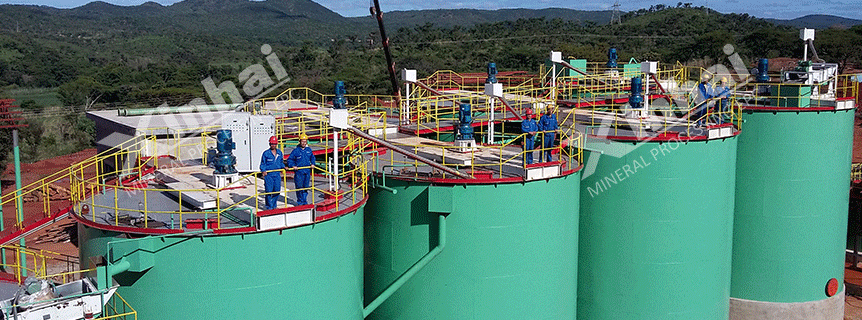
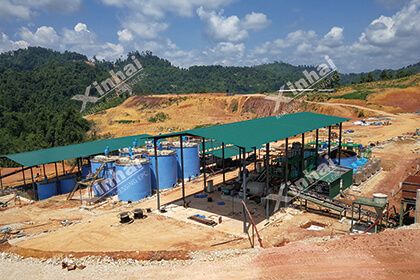
Leaching-Section-of-a-700-tpd-Gold-Ore-Processing-Plant
Zambia, known as the "Copperbelt Nation," is Africa's second-largest copper producer. For mineral processing engineers and equipment manufacturers, the country's value lies not merely in "what lies beneath the ground," but in the fact that it is one of the few markets in the world where "there is plenty of ore, but processing capacity cannot keep up" — on one side, rapidly expanding processing and smelting demand; on the other, tight smelting capacity and energy constraints. This article approaches the subject from the perspective of mineral processing technology and equipment, outlining Zambia's mining fundamentals, concentrator landscape, and equipment opportunities.
01Country Overview
BackThe Republic of Zambia is located in south-central Africa and is a landlocked country, bordering the Democratic Republic of the Congo (DRC), Tanzania, Malawi, Mozambique, Zimbabwe, Botswana, Namibia, and Angola. It covers approximately 752,600 km² and is divided into 10 provinces and 103 districts. Mining accounts for about 15% of GDP, yet over 70% of export revenue comes from copper. With low per-capita income and a thin manufacturing base, virtually all industrial goods and equipment must be imported — for equipment vendors, this means a large and stable market, albeit one with intense and straightforward competition.
02Mineral Resources and Ore Types
BackCopper resources are concentrated in two major regions, and the differences in ore type directly dictate the process route:
1.Copperbelt Province
Extending along Zambia's border with the DRC, this region forms part of the Central African Copper-Cobalt Belt and is dominated by sediment-hosted stratiform copper-cobalt deposits. The legacy mines are concentrated here.
2. North-Western Province
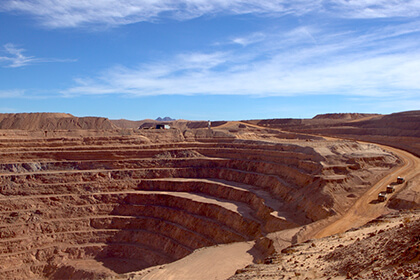
This is the main battleground for new capacity added over the past decade or so. Kansanshi is a skarn-type copper-gold deposit hosting all three ore types in coexistence; Sentinel and Lumwana are large, low-grade sulphide operations that depend on large-scale, high-throughput modern concentrators.
03Beneficiation Flowsheets and Concentrator Layout
BackZambia's copper ore processing and smelting landscape can broadly be divided into "two routes across four tiers": conventional flotation supplemented by hydrometallurgy at the legacy mines in the Copperbelt Province, large-scale SABC grinding plus flotation at the new mines in North-Western Province, underpinned by centralized pyrometallurgical smelting and a hydrometallurgical leaching capacity that is still being built out.
1.Copperbelt Province
Conventional sulphide flotation dominates, with hydrometallurgy playing a supporting role. The mainstream flowsheet is crushing – grinding – copper–cobalt flotation, producing copper concentrate that is dispatched to smelters, with cobalt recovered either during smelting or through a dedicated flotation circuit.
2.North-Western Province
Hosts the large, modern concentrators that represent the ceiling of Zambian beneficiation equipment. Two mines are worth a closer look:
(1)Sentinel (Trident project, Kalumbila)
a large open-pit mine with a life-of-mine (LoM) average grade of only 0.42% and a strip ratio of 2.53:1. Primary crushing is performed in-pit by three semi-mobile gyratory crushers; the ore then reports to grinding after overland conveying and secondary crushing. Each of the two grinding lines comprises a 28 MW SAG mill and a 22 MW ball mill, both driven by gearless (GMD) drives. The flotation circuit comprises rougher–scavenger flotation followed by four stages of cleaning, configured with four column flotation cells and a Jameson flotation circuit, with a design throughput of 55 Mtpa. Concentrate is thickened, filtered and trucked by road to the Kansanshi Smelter.
(2)Kansanshi (First Quantum)
supplied by three open pits (Main, Northwest and Southeast Dome), with sulphide, mixed and oxide ores each following their own route — sulphide ore is treated by conventional flotation, while mixed and oxide ores undergo sulphidization–leaching, with the pregnant leach solution fed to SX-EW to produce cathode copper. A portion of the flotation concentrate is sent to high-pressure leaching (HPL) for copper and gold recovery in autoclaves. Gold is recovered through six gravity concentrators and Gemini tables, yielding a high-grade gold concentrate that is smelted directly on site. The 2025 S3 expansion adds a 25 Mtpa processing line — the single largest beneficiation-and-smelting investment in Zambia in nearly a decade.
04Relevant Laws and Regulations
BackThe foundational law governing Zambia's mining sector is the Minerals Regulation Commission Act(No. 14 of 2024, the "MRCA"), signed on 20 December 2024 and fully effective from 13 June 2025, replacing the 2015 Mines and Minerals Development Act.
1.Exploration Licence
Valid for 4 years, renewable twice, each renewal not exceeding 3 years, for a cumulative maximum of 10 years. Each renewal requires the relinquishment of 50% of the exploration area. Exploration and large-scale mining licences carry no equity restrictions for foreign investors.
2.Large-Scale Mining Licence
Foreign investors may hold 100% ownership. Mineral processing activities such as beneficiation and smelting require a separate mineral processing licence, which — like mining licences — may be held by foreign entities.
3.Small-Scale Mining (6.68 hectares to 1,000 hectares)
Restricted to citizen-controlled, citizen-led, or citizen-empowered enterprises. Artisanal mining rights are reserved for citizens, although foreign companies may enter into joint ventures with artisanal miners with MRC approval.
4.Transfer of Mineral Rights
Transfers require MRC approval and the submission of a tax clearance certificate.
05Taxation Regime
Back1.Corporate income tax
30% for mining companies; dividend withholding tax at zero; loss carry-forward limited to 50% of taxable income.
2.Property transfer tax
effective 1 January 2025, transfers of mining licences are taxed at 10%, exploration licences at 8%, and mineral processing licences at 10%.
06Investment Outlook
BackViewed from the standpoint of processing technology and equipment, the opportunities in Zambia roughly fall into four areas:
1.Concentrator equipment demand from expansion projects
Demand for crushing, grinding, flotation, thickening, filtration, and SX-EW equipment is a certainty, and most of it must be imported.
2.Rehabilitation and technical upgrades
Concentrated replacement demand for consumables and spares such as ball mill liners, grinding media, flotation reagents, and electrowinning cathode plates.
3.Filling the smelting and hydrometallurgy gap
Process services for smelter slag recovery, tailings reprocessing, and heap leaching of low-grade oxide ores all have a market.
4.Equipment upgrades driven by energy constraints
Mining consumes about half of national electricity, Energy-efficient grinding equipment, solar and backup power packages, and high-efficiency flotation processes will be more competitive in this round of power shortage.
07Conclusion
BackFor mineral processors and equipment suppliers, the value of Zambia's mining sector lies in the fact that it is at a stage of "mining expansion and processing catch-up": ore keeps growing while processing and smelting capacity lags behind, and the gap in between is all opportunity. However, the four hurdles — electricity, exchange rate, policy volatility, and logistics — must be thought through carefully before entering. This article is intended to serve as a reference for readers' decision-making and does not constitute direct investment advice.


RELATED PRODUCTS
-
Pregnant Solution Purification Tank
-
Mobile Crushing and Screening Equipment
-
Magenetic Drum