+8618234403483
 yanzhang19990421@gmail.com



Analysis of Two Core Gold Ore Types and Their Processing Methods
 zeki
zeki
 Apr 27, 2026
 492
492
If you want to know more details about equipment, solutions, etc, please click the button below for free consultation, or leave your requirements!
 Message
 Chat Now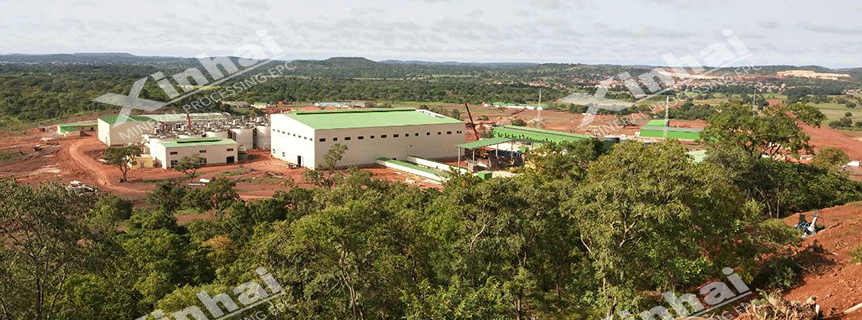
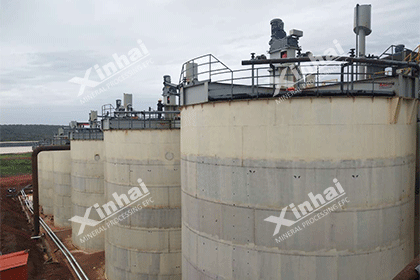
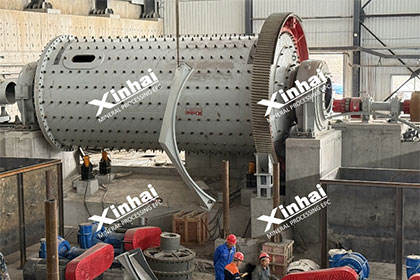
Guinea-Gold-Mine-6000-tpd-Processing-Plant
Gold ore beneficiation is a critical link in gold extraction. The selection of beneficiation methods and technological processes mainly depends on ore type, gold occurrence state, mineral composition, ore properties and other factors. This paper focuses on analyzing the beneficiation methods and technological processes of two core types of gold ores, so as to provide references for practical production.
01Beneficiation of Primary Gold Ore (Quartz Vein Type)
BackCore Characteristics
It serves as the primary industrial gold resource. Gold mostly occurs as native gold in quartz veins with stable dissemination and simple associated components, featuring mature and universally applicable beneficiation technologies.
Overall Process
Pretreatment → Roughing Operation → Concentration & Purification → Typical Technological Flow
1. Pretreatment of Primary Gold Ore (Quartz Vein Type)
Core Objective
To fully dissociate gold minerals from gangue, reduce over-grinding, and improve the separation efficiency and recovery rate in subsequent processes.
(1) Crushing Operation
Adopt a three-stage one closed-circuit crushing process
Coarse crushing: Jaw crusher, crushing bulk ore into small particles;
Medium crushing: Cone crusher, further reducing ore particle size;
Fine crushing: Controlling the feeding particle size of ball mills within 10-20 mm, and pre-discarding barren gangue with no gold content.
(2) Grinding and Classification
Closed-circuit circulation of ball mill and classifier
Grinding: Grinding ore to the target fineness to ensure the dissociation of gold and gangue minerals;
Classification: Qualified fine-grained ore is delivered to subsequent separation, while coarse particles are returned for regrinding.
2. Roughing Operation of Primary Gold Ore (Quartz Vein Type)
Core Objective
Rapidly enrich gold minerals, discard a large amount of low-density gangue to obtain rough concentrate, and reduce the load of subsequent operations.
(1) Gravity Separation Roughing
Scope of Application: Recovery of coarse-grained native gold (particle size > 0.074 mm);
Common Equipment: Jig, shaking table, centrifugal separator;
Principle: Separating gold from gangue based on density difference under gravity and centrifugal force.
(2) Flotation Roughing
Scope of Application: Recovery of fine-grained and disseminated gold (particle size < 0.074 mm);
Core Reagents: Collectors, frothers, regulators;
Principle: Modifying the surface properties of gold minerals to make them adhere to mineral foam and separate from gangue.
(3) Combined Roughing
Gravity separation is used to recover coarse-grained gold, and flotation is adopted to extract fine-grained gold from gravity separation tailings, so as to increase the overall recovery rate.
3. Concentration & Purification of Primary Gold Ore (Quartz Vein Type)
Core Objective
Remove gangue and impurities from rough concentrate, upgrade the grade of gold concentrate to meet smelting requirements.
(1) Gravity Concentration
Fine separation by shaking table with adjusted operating parameters to further separate gold from gangue.
(2) Flotation Concentration
Adopt 2 to 3 stages of cleaning and 1 to 2 stages of scavenging, and regulate reagent dosage to produce high-grade gold concentrate.
(3) Cyanide Leaching
Scope of Application: Fine-grained gold or concentrates difficult to separate by gravity separation and flotation;
Dominant Processes: CIP (Carbon-in-Pulp, leaching followed by adsorption) and CIL (Carbon-in-Leach, simultaneous leaching and adsorption);
Precautions: Cyanide is toxic, and tailings must be subjected to harmless treatment.
(4) Auxiliary Operations
Depuration, thickening and filtration.
4. Typical Beneficiation Processes of Primary Gold Ore (Quartz Vein Type)
(1)Gravity Separation Flow
Crushing — Grinding — Gravity Separation (Jig/Shaking Table) — Gold Concentrate
Suitable for small-scale mines with coarse-grained gold.
(2)Flotation Flow
Crushing — Grinding — Flotation — Gold Concentrate
Applicable to fine-grained and disseminated gold ores.
(3)Combined Process Flow
Crushing — Grinding — Gravity Separation — Flotation — Cyanide Leaching — Gold Ingots
Widely applied in large and medium-sized mines with high metal recovery rate.
02Beneficiation of Placer Gold Ore (Alluvial Gold)
BackCore Characteristics
Formed by natural enrichment of primary gold ore. Gold mainly exists in the form of monomer native gold, with the advantages of easy mining, easy separation and low cost, acting as an important source of gold resources.
Overall Process
Mining and Feeding Preparation → Roughing Operation → Concentration & Purification → Typical Technological Flow
1. Mining and Feeding Preparation of Placer Gold Ore (Alluvial Gold)
(1) Mining Methods
Dry Mining: Applied to terrestrial placer deposits, equipped with bulldozers, loaders and bucket-wheel excavators;
Dredger Mining: Suitable for riverbed and offshore placer deposits, including bucket chain dredgers, suction dredgers and bucket-wheel dredgers;
Transportation: Belt conveyors and sand pump pipelines.
(2) Feeding Preparation
Ore Washing: Break up mud agglomerates and remove surface slime from ores;
Screening: Separate gravel larger than 50 mm to prevent equipment blockage;
Desliming: Remove fine slime below 0.01 mm to avoid adverse impacts on separation;
Classification: Particle size classification to match different beneficiation equipment.
2. Roughing Operation of Placer Gold Ore (Alluvial Gold)
Core Objective: Tailings discarding and mineral enrichment to obtain heavy mineral rough concentrate and reduce the load of concentration operations, following the principle of "tailings discarding prior to enrichment".
Common Gravity Separation Equipment: Jig, spiral chute, cone separator;
Separation Effect: Produce heavy mineral rough concentrate with 85%-90% heavy mineral content;
Scavenging Operation: Agitating chute and centrifugal separator are used to recover fine-grained gold from roughing tailings for higher total recovery;
Plant Features: Integrated with mining, mostly mobile to adapt to the fluidity of placer deposits.
3. Concentration & Purification of Placer Gold Ore (Alluvial Gold)
(1) Core Objective
Remove associated heavy minerals and impurities to produce high-purity gold concentrate compliant with smelting processes.
(2) Gravity Concentration
Shaking table is taken as the core equipment. Operating parameters are adjusted for precise separation of gold from associated minerals and gangue through multiple cleaning stages if necessary.
(3) Dewatering and Refining
Dewatering: Thickener and filter are adopted to prepare low-moisture solid gold concentrate;
Refining: Smelting furnace with flux is used to remove impurities such as sulfur and iron to produce crude gold or gold ingots.
(4) Tailings Treatment
Carry out classification through sedimentation tanks for recycled clean water, and realize standardized stockpiling or land reclamation of solid tailings.
4. Typical Beneficiation Processes of Placer Gold Ore (Alluvial Gold)
(1)Standard Process Flow
Ore Washing — Screening — Jig Roughing — Chute/Centrifugal Scavenging — Shaking Table Concentration — Thickening & Filtration — Smelting — Gold Ingots
Suitable for large and medium-sized fixed mines.
(2)Mobile Processing Plant Flow
Mobile Ore Washing & Screening — Mobile Roughing — Mobile Concentration — Gold Concentrate
Applicable to small-scale and temporary mining sites.
03Conclusion
BackThe selection of beneficiation processes is determined by ore type, gold occurrence state and mineral properties, combined with on-site conditions, environmental protection requirements and economic benefits. For primary quartz vein type gold ore, the mainstream technology is the combined process of crushing-grinding-gravity separation/flotation-cyanidation, which is suitable for large and medium-scale production. For alluvial placer gold ore, the core flow consists of ore washing-gravity roughing-gravity concentration, featuring simple procedures and low operating costs, and adaptable to mines of all scales. In practical production, comprehensive ore tests shall be conducted first, and targeted process design and equipment selection shall be implemented to achieve high-efficiency, economical and environmentally friendly gold extraction.